
Solar inverter repair: claim first, pay second
Inverter warranties in our catalogue run 10 to 12 years, and several start before your install date. Work out your real expiry and check the conditions before anyone quotes you for a replacement.
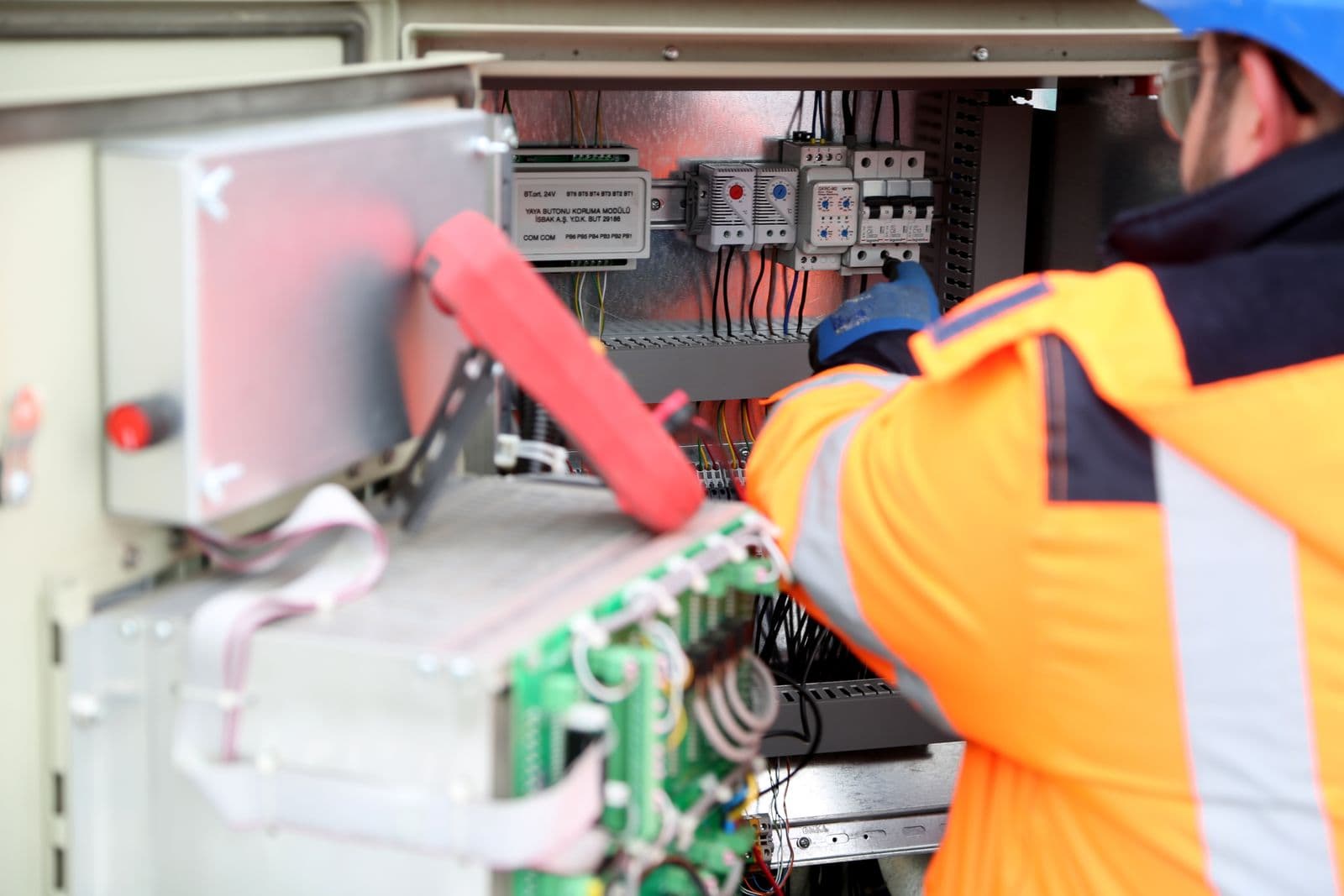
Photo: Pexels
An inverter that has stopped is the most common reason a solar system stops, and it is also the most commonly mispriced repair, because people ask what a replacement costs before they ask whether they are paying for it. Every inverter brand in our catalogue carries a 10 or 12 year parts term, and Enphase carries 25 years on the IQ8 microinverter. If you are inside the term, the part should be free.
The labour almost certainly is not. So the order is: confirm the fault, work out the real expiry date, check the brand's conditions, then get a quote.
Confirm it is actually the inverter
Inverters get blamed for a great deal that is not the inverter. An isolator that has failed. A DC fault in a string. A panel that went open circuit and took the string with it. A breaker that tripped in a storm. A monitoring outage where the system is producing perfectly well and only the app has fallen over.
From the kitchen all of those look identical: the system has stopped.
What you can check yourself: whether the display or status light shows an error code, whether the AC breaker has tripped, whether the fault is total or partial, and whether the monitoring shows the drop as a clean cliff or a gradual slide. Write down the error code before you ring anyone. It is the single most useful thing you can hand a service company, and it sometimes decides whether the first visit carries a replacement unit or not.
What you should not do is open the enclosure. There is stored energy in there and it is licensed work.
How long do solar inverters last?
Shorter than the panels above them, and the manufacturers say so themselves in the terms they sign.
| Brand | Parts term we hold | When the term starts |
|---|---|---|
| SolarEdge | 12 years standard | Earlier of installation or four months from shipment |
| Fronius | 10 years with Warranty Plus | Delivery ex works, or commissioning if registered in Solar.web |
| Sungrow | 10 years | Installation date |
| GoodWe | 10 years, or 5 if the conditions are not met | Per the document, with the SEMS condition attached |
| SMA | 10 years factory, US residential | Per the document |
| Sol-Ark | 10 years | Initial purchase or receipt by the end user, whichever is later |
| EG4 | 10 years on current inverters | Per the document, with registration or proof of purchase expected |
| Enphase | 25 years on IQ8 microinverters | Activation in Enlighten |
Set that against the panel side, where product cover runs 25 to 30 years, and the structural fact of owning solar becomes obvious: the array outlives the box on the wall, usually more than once. How long do solar panels last sets both sets of terms out together.
Note the second column, because it is where people get an unpleasant surprise. Only Sungrow measures purely from your installation date. SolarEdge can start four months after shipment. Fronius starts at delivery ex works unless somebody registered the unit in Solar.web. Sol-Ark runs from purchase or receipt by the end user, whichever is later. A system installed six years ago might have five years of cover left, or three, depending on how long the unit sat in a warehouse. The warranty deadline calculator works the real date out from the dates you have.

Check the conditions, not just the dates
Two brands can shorten their own term with no deadline missed and no notification sent.
GoodWe. The 10 year term holds only while the inverter is connected to the SEMS portal and uploading generation data, and on a hybrid running a Lynx battery both the inverter and battery serials have to be registered at the GoodWe registration portal. Miss either and the term is five years instead of ten. Nobody tells you when it happens, which is how a router swap in year two becomes a denied claim in year seven. If your GoodWe has been offline for a while, that is a live warranty problem and not just a missing app. The GoodWe SEMS trap has the full picture.
Fronius. The free 10 year Warranty Plus depends on registration in Solar.web within 30 months of delivery ex works, and registering also moves the start of cover from delivery to commissioning. Units installed before 1 October 2024 use a 24 month window from installation.
Three more worth confirming before you assume a term:
- SMA: registration in the Online Service Center is what attaches the warranty record to the unit, and it is the door to a paid extension later, purchasable at any point during the factory term up to 20 years total.
- Sol-Ark: coverage terms differ for professional versus owner installs, and owner installs carry extra hold harmless conditions, so who installed it is part of the warranty record.
- EG4: registration is expected within the first year of purchase, with proof of purchase from an authorised distributor accepted as the fallback. One of the two has to exist.
And one that is a buying decision rather than a repair one: SolarEdge's standard 12 years needs no registration, but the paid extension to 20 or 25 years has to be bought within 24 months of shipment. If your unit is older than that, the decision has already been made for you. See the SolarEdge warranty extension.
"My inverter is six years old and the warranty is ten years" is not a conclusion. It is a hypothesis with two things to check.
What is actually repairable
Some inverter faults are genuine repairs. A failed cooling fan, a failed external isolator, a communications card or dongle, a loose or corroded terminal, a firmware fault that a remote update fixes.
Many are not, because the failure sits on a board that is not sold as a spare and the manufacturer's own answer to the fault code is a whole unit swap under RMA. That is not a service company being lazy. It is how the warranty process is designed: the brand ships a replacement unit, and a local licensed installer fits it.
Which makes "repair or replace" less of a decision than it looks. The real decision is at the end of the term: an inverter at year 10 or 12 that has just failed can be replaced now, at a time you choose, with a fresh 10 or 12 year promise, rather than waiting for it to fail again in midwinter.
Who repairs a solar inverter
Your original installer, if they are trading. They hold the commissioning data and the distributor relationship, which is what actually moves an RMA along.
Any licensed solar installer, if not. Ask explicitly whether they will run the manufacturer claim or only do the physical work. Those are different services and only one of them saves you money.
The manufacturer, mostly at arm's length. Brands handle inverter faults through RMA and a replacement unit rather than by sending an engineer to your house.
If your installer has closed, the manufacturer parts cover survives and the workmanship cover does not. What to do when your solar installer goes out of business covers where that leaves you.
What the bill is made of
We do not publish dollar ranges here. Inverter prices, licensed electrical rates and trip charges vary too much by country, state and distance for an average to help you judge a real quote. The shape of the bill is stable, though:
trip charge
+ (hours on site x hourly rate)
+ the unit, if not covered
+ access, if it is a rooftop microinverter
+ commissioning, compliance paperwork and network notification
= the job
Two lines people forget. Compliance: new equipment on a grid connected system usually means a fresh compliance certificate and notifying your network or utility, which is time on somebody's bill. Access: a wall mounted inverter in a garage is simple, while a microinverter under a panel in the middle of a roof means panel removal, refitting and whatever access equipment the roof needs.
The inverter replacement cost tool walks the same line items so you can see whether a quote has left something out, and solar inverter replacement cost covers the decision in more depth.
Microinverters are a different job
On a string system the inverter is one box in an accessible place. On a microinverter system there is one unit per panel, on the roof, under the module.
The good news is diagnosis: per panel monitoring tells you exactly which unit has failed, so nobody is guessing. The bad news is access: fixing it is a roof job.
This is also the only place in our catalogue where a manufacturer pays a stated rate toward the visit. Enphase, in the United States, reimburses $200 per truck roll plus $25 per replaced microinverter, and its paid Labor Protection Program extension stretches labour cover to five or ten years from activation. A truck roll costs more than $200, so the reimbursement is a contribution rather than a solution. The truck roll cost tool puts your real cost against it.
Everywhere else, labour cover is thin or absent. The Fronius, Sungrow and GoodWe lines we hold carry 12 months of labour alongside their 10 years of parts. SolarEdge, SMA, Sol-Ark and EG4 carry none at all. After the first year, on most systems, the part is free and the visit is yours. The side by side is on the inverter warranty comparison, and the full picture across brands is in labour reimbursement by brand.
Before you call
Have these ready and the first conversation is a short one:
- The brand, model and serial number of the inverter, from the nameplate label
- The error code on the display or in the app
- The installation date, and the delivery or shipment date if you have it
- Whether the monitoring is connected, which is a warranty condition on GoodWe and worth stating either way
- The original invoice
- Photographs of the nameplate and of the fault as displayed
The claim pack checklist builds the list for your brand, and how to file a solar warranty claim walks the rest of the process.
The short version
- Confirm the fault is the inverter and write down the error code.
- Find the delivery or shipment date, not just the install date, and work out the real expiry with the deadline calculator.
- Check the conditions, especially GoodWe's SEMS connection and Fronius registration.
- If it is in term, the unit should be free. Ask who pays the labour, in writing.
- If it is out of term, get two quotes and check both include commissioning, compliance and access.
Every inverter brand we have checked is at inverter warranties by brand, with the date the document was read on the page.
Checked against
- SolarEdge Australia: warranty
- Enphase: home solar system warranty coverage
- Fronius Australia: warranty models
- GOODWE Limited Warranty for Inverter System, Australia and New Zealand
- Sungrow Australia: warranty registration and service
- SMA America: service and warranty
- Sol-Ark: support and warranty
- EG4 Electronics: warranty
Warranty terms change and differ by country. Treat this as a starting point and check the manufacturer's current document before you rely on it.
Keep reading
Solar panel repair: check the warranty before you pay
Most solar panel repairs are actually replacements, and a good share of them are somebody else's bill. Work out which of the three warranties your fault belongs to before you approve any quote.
ClaimsHow to build a warranty claim pack a manufacturer accepts first time
A claim pack is five documents assembled in the right order, most of them captured at install rather than at failure. Here is what goes in one, what each brand adds on top, and how to send it so it does not stall.
Keep the serial, the photo and the date on every install
Claim Timer stores one record per piece of equipment, with the nameplate photo and the registration confirmation on it, so the claim has its proof already.