
Solar panel repair: check the warranty before you pay
Most solar panel repairs are actually replacements, and a good share of them are somebody else's bill. Work out which of the three warranties your fault belongs to before you approve any quote.
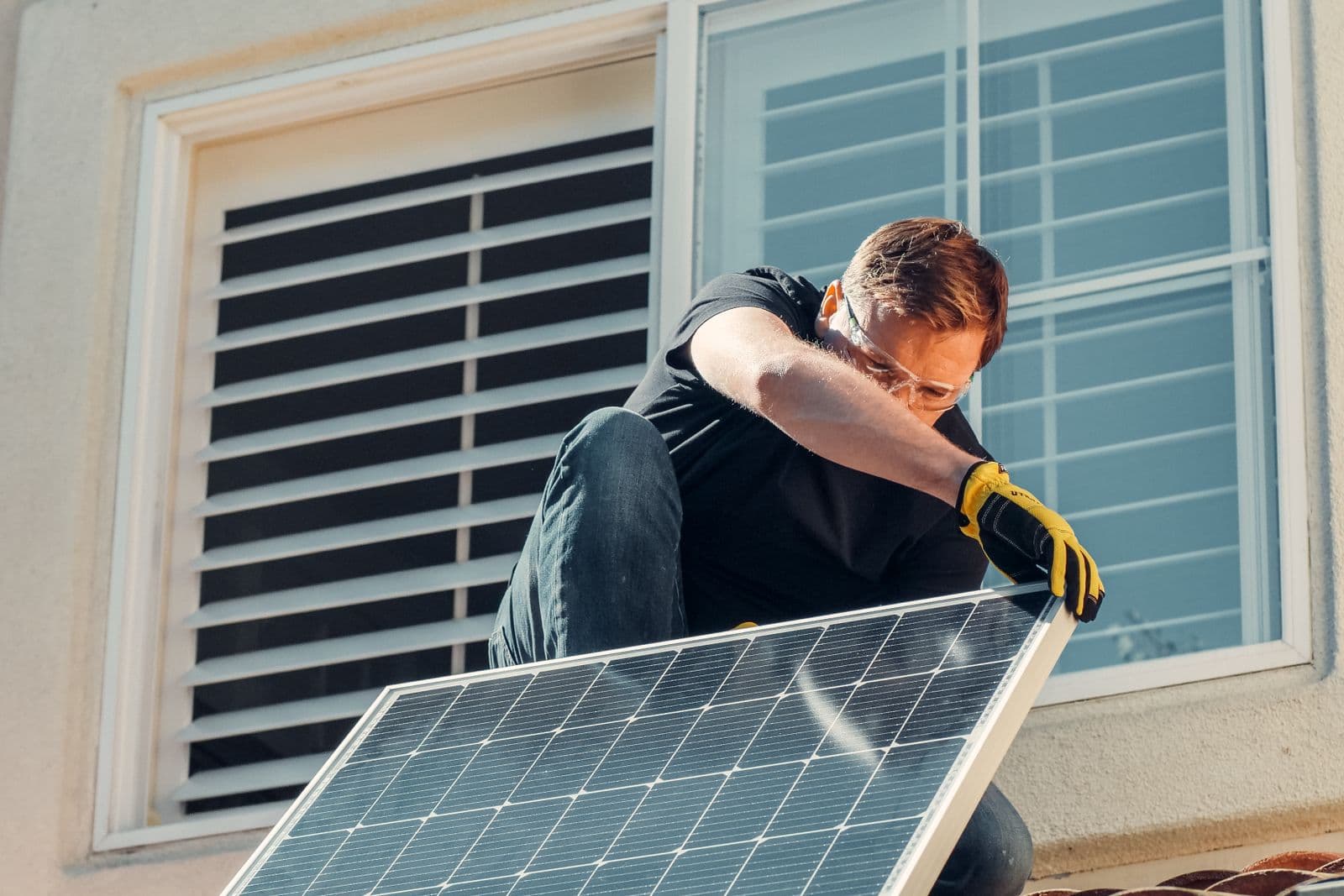
Photo: Pexels
Before you pay anyone to repair a solar panel, find out whether it is a claim. The panel brands in our catalogue carry 25 to 30 years of product cover, which means a genuinely defective module is very likely still the manufacturer's problem, whatever the age of the system feels like. What is almost never covered is the labour: across the panel brands we have read, only REC's Alpha Pure-R line carries any labour cover at all.
So the split you are really trying to establish is: free part, paid visit, or paid everything.
First, work out what is actually broken
"Solar panel repair" is what people search when the system has stopped or the numbers look wrong. The panels are usually not the reason.
The realistic list, roughly in order of how often it turns out to be the answer:
- The inverter. The component with the shortest warranty and the most electronics in it. If the whole system is down, start here. See solar inverter repair.
- An isolator, breaker or connector. Cheap parts in exposed places, and a common cause of a system that stopped after a storm.
- A string that has gone open circuit. One bad connection takes out everything downstream of it, which on a string system looks like half your production disappearing.
- Shading that has developed. Trees grow. A loss at the same time every day is not a defect.
- Dirt. Reversible, and worth ruling out before anyone quotes for anything. Solar panel maintenance covers when cleaning genuinely pays.
- The monitoring. Sometimes the system is fine and only the reporting has fallen over. Which is not harmless: on GoodWe, the inverter staying connected to the SEMS portal is a warranty condition, and losing it quietly turns a 10 year term into 5.
- An actual panel fault. Delamination, a browned or burnt cell, a cracked laminate, a failed junction box, corrosion at the frame, a hot spot.
A diagnosis visit is not wasted money. Replacing a working panel is the most expensive way to not fix a problem.
Which of the three warranties owns your fault
This is the question that decides who you call, and it is the one nobody explains at handover. There are three separate promises on your roof, made by three different companies.
The product warranty covers the panel being defective. Manufacturing faults: delamination, a failed junction box, a corroding frame, a cell that cracked with no external cause. This is the manufacturer, and on the brands in our catalogue it runs 25 to 30 years.
The performance warranty covers the panel underproducing against the published curve on its datasheet, even when nothing is visibly wrong. Also the manufacturer, usually for longer than the product term: Canadian Solar's current residential modules carry 25 years product and 30 years performance, and Silfab's performance warranty runs 30 years regardless of what happens to its product cover. Test your reading against your panel's own curve with the degradation calculator before you call it a fault.
The workmanship warranty covers the installation: mounting, flashing, cable management, isolators, the roof penetrations. This is your installer, and it is usually far shorter than either of the others.
Damage belongs to none of them. Hail, a fallen branch, a cracked module because a roofer walked across the array: that is an insurance question, and a product warranty will not touch it. Product, performance and workmanship warranty is the longer version, and why solar warranty claims get denied is what happens when the wrong one is claimed against.

Who fixes solar panels?
There are four answers, and the right one depends on the split above.
Your original installer, if they are still trading. This is the best case by a distance. They hold the design, the serials, the commissioning data and the workmanship obligation, and they can raise the manufacturer claim on your behalf because they have the account with the distributor.
Any licensed solar installer or electrician, if the original is gone or you have lost confidence in them. Grid connected solar is licensed electrical work; a general handyman is not an option. Ask specifically whether they will handle the manufacturer claim or only do the physical work, because those are different services and only one of them saves you money.
The manufacturer's service network. Most panel makers do not send anyone to your house. They ship a replacement module to a distributor or an installer and expect a local trade to fit it. Enphase is the structural exception, because it pays a service company toward the visit rather than only supplying the part.
Nobody, if the panel is not really repairable. Which is most of the time, and is the next section.
If your installer has closed, you have not lost the manufacturer cover, only the workmanship cover. What to do when your solar installer goes out of business and taking on orphaned solar customers cover both sides of that situation, the second one from the point of view of the company you are about to ring.
If the manufacturer is the one that has gone, the situation is harder and the honest answer is different: what happens to your warranty when a solar manufacturer goes bankrupt.
Panels are replaced, not repaired
Worth saying plainly, because "repair" sets the wrong expectation.
A module is a sealed laminate: glass, encapsulant, cells, backsheet, frame and a bonded junction box. There is no serviceable interior. Cracked glass, delamination, a browned cell or moisture ingress cannot be fixed on a roof or in a workshop at a price that makes sense. The manufacturer's own answer to a defect is a replacement module.
The genuinely repairable items on the DC side are the things around the panel: a junction box lid or connector in some cases, MC4 connectors, cable clips, mounting hardware, an isolator. Those are cheap parts and ordinary work, and they are usually workmanship territory rather than manufacturer territory.
One practical consequence of replacement: your original model may not be made any more. Manufacturers substitute a current equivalent, which can differ in size and rating. On a string, a mismatched module can drag the string, so the design consequence matters and is worth asking about before anyone orders anything.
Solar panel repair cost: build your own number
We do not publish dollar ranges. Rates for licensed electrical work, call out charges and access equipment vary too much by country, state and distance from the nearest service company for an average to mean anything when you are holding a real quote. What we can give you is the shape of the bill.
trip charge
+ (hours on site x hourly rate)
+ access equipment
+ replacement parts, if not covered
+ testing, reporting and any compliance paperwork
= the job
The drivers that move each line:
The trip. Fixed, and unrelated to how quick the job is. It is also why a diagnosis visit and a repair visit on separate days cost meaningfully more than one visit doing both. If a part has to be ordered, ask whether the second visit is charged again.
Access. A single storey tiled roof at a walkable pitch is one job. Two storeys, a steep pitch, brittle tile, or anything needing a scaffold or an elevated work platform is a different job entirely, and on a panel swap the access can outweigh everything else.
Position in the array. A panel at the edge is quick. A panel in the middle of a fully populated roof means moving other modules to get to it, then refitting them.
Testing and paperwork. A written report with readings is what turns a repair into evidence a manufacturer will accept, and on a grid connected system a component change can mean compliance paperwork. Both are time.
Whether the part is a claim. The difference between the whole bill and just the visit.
The truck roll cost tool runs the same arithmetic from the service company's side, which is the quickest way to understand why a call out costs what it does and how little of it any manufacturer covers.
The labour question, which is the whole question
If the module is defective and inside its term, the replacement panel should be free. Somebody still has to come to your house, get on the roof, take the old one down, fit the new one and recommission the system, and that bill is almost always yours.
Two exceptions exist in our catalogue and they are worth knowing by name:
- REC's Alpha Pure-R line carries 20 years of labour cover, the longest labour term we hold. Note that REC's ProTrust cover exists only where a certified installer registered the installation, so this is also the brand where confirming a registration matters most.
- Enphase, in the United States, reimburses $200 per truck roll plus $25 per replaced microinverter, with a paid Labor Protection Program extension stretching labour cover to five or ten years from activation. That is the only stated labour rate in the catalogue. See is the Labor Protection Program worth it.
Everything else pays for the part and nothing toward the visit. The side by side is on the panel warranty page, and the full comparison across brands is in labour reimbursement by brand.
What to have ready before you call anyone
A claim gets paid on evidence collected before the panel comes off the roof, not after.
- The panel model and the serial numbers of the specific modules involved. Serials are on a label under the module and on the packaging paperwork. Reading a solar panel serial number covers where to look.
- Photographs: the fault, the whole array, and the label. Dated.
- The purchase and installation invoices. Jinko will want the warranty certificate plus both invoices before it looks at a claim, and on Trina the invoice and the install date are effectively the whole file.
- Production history, not one bad day.
- Any monitoring data showing when it changed.
The claim pack checklist builds the list for your brand, and how to file a solar warranty claim walks the process.
The order of operations
- Confirm what is actually broken. It is more often the inverter or a connector than a panel.
- Decide which warranty owns it: product, performance or workmanship.
- Find your real term start date, which for several brands is delivery or invoice rather than installation. The warranty deadline calculator will place it.
- Gather serials, photographs and invoices before anything is removed.
- Raise the claim, then get the quote for the labour, in writing, with the access method stated.
Every brand we have checked is at warranties by brand, with the date the document was read printed on the page.
Checked against
- REC Group: warranty registration
- Jinko Solar: warranty
- Trina Solar: support and warranty
- Canadian Solar: warranty
- Silfab Solar: warranty registration
- Q CELLS
- Enphase: home solar system warranty coverage
Warranty terms change and differ by country. Treat this as a starting point and check the manufacturer's current document before you rely on it.
Keep reading
Solar inverter repair: claim first, pay second
Inverter warranties in our catalogue run 10 to 12 years, and several start before your install date. Work out your real expiry and check the conditions before anyone quotes you for a replacement.
ClaimsHow to build a warranty claim pack a manufacturer accepts first time
A claim pack is five documents assembled in the right order, most of them captured at install rather than at failure. Here is what goes in one, what each brand adds on top, and how to send it so it does not stall.
Keep the serial, the photo and the date on every install
Claim Timer stores one record per piece of equipment, with the nameplate photo and the registration confirmation on it, so the claim has its proof already.