
Solar panel warranty explained: the three types and what each one covers
A solar system carries three separate warranties, and they are held by different companies. Here is what each one covers, how long it lasts, and which one you need when something breaks.
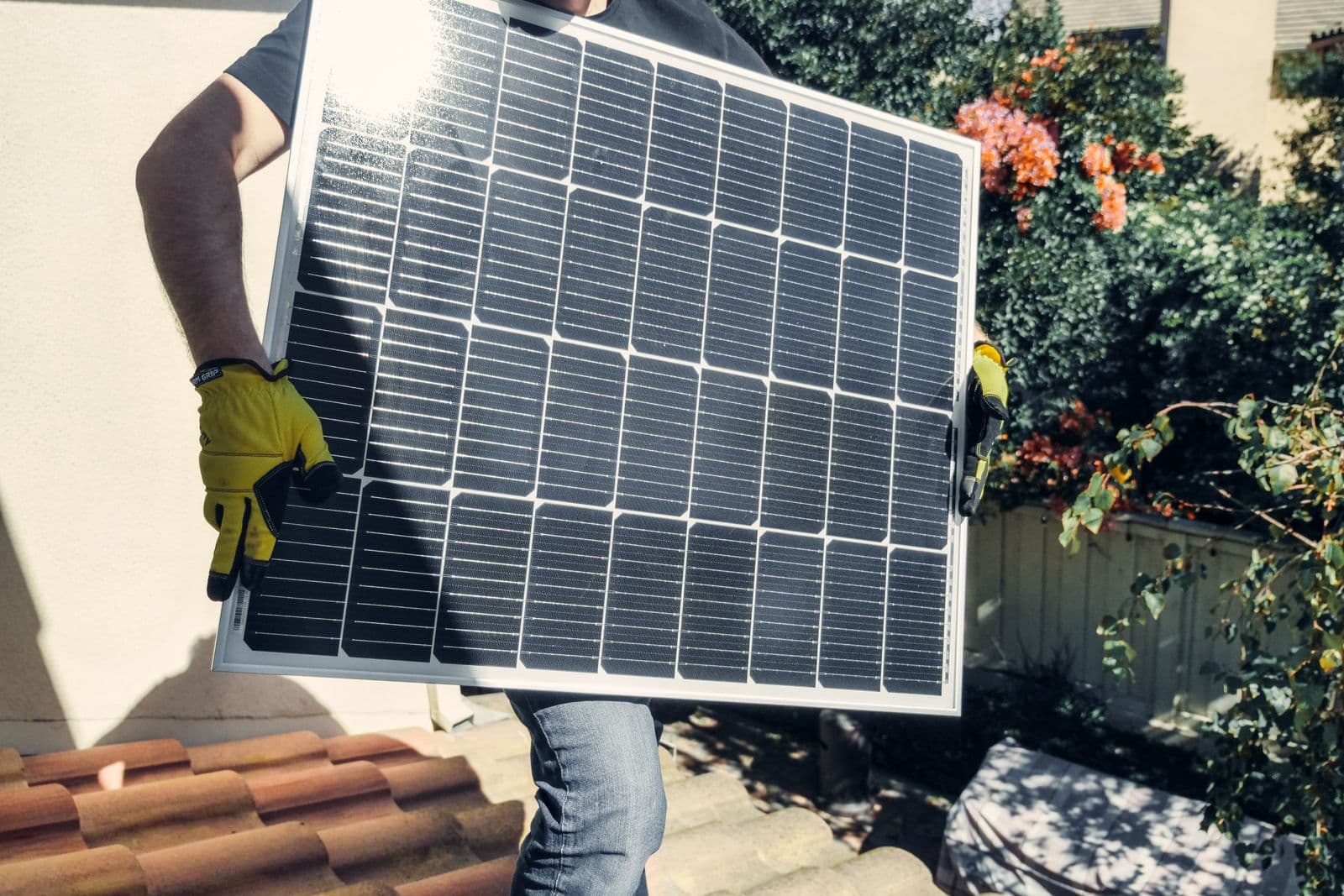
Photo: Pexels
People say "the warranty" as if a solar system has one. It has at least three, and they are held by different companies for different things.
That matters the day something breaks. Ring the wrong company and you get told it is not their problem, which is often true. Here is how the three split up.
The three warranties on a solar system
| Warranty | Who holds it | What it covers | Usual length |
|---|---|---|---|
| Product | The equipment maker | The panel, inverter or battery being faulty | 10 to 25 years |
| Performance | The panel maker | Panels still making close to the power they promised | 25 to 30 years |
| Workmanship | The installer | The install itself: roof leaks, wiring, mounting | 5 to 10 years |
Read that table again and notice something. Two of the three are held by a manufacturer overseas. Only one is held by the company that came to your house.
Product warranty
This is the one people mean when they say warranty. The panel, inverter or battery is faulty, so the maker replaces it.
Every piece of gear on the roof has its own. A normal job has three: one for the panels, one for the inverter, one for the battery if there is one. They are different lengths and they start on different dates, so they do not run out together.
One thing catches people out. A product warranty usually covers the part, not the work of putting the part in. More on that below, because it is where most of the surprise bills come from.
Product warranties often have conditions
A warranty length on a brochure is often the best case, not the only case. You get the long version if you meet the conditions.
Two real examples from brands used in Australia:
- GoodWe gives ten years on many inverters, but only if the inverter is connected to their SEMS portal, sending generation data, and the inverter and battery serial numbers have been registered. Miss that and the term is five years.
- Fronius gives a free ten year Warranty Plus if the inverter is registered in Solar.web. Register it and cover starts from commissioning rather than from the date it left the factory.
Not every brand works this way. Sungrow, for example, encourages you to register but does not make the warranty depend on it, and their term runs from the installation date either way.
The lesson is not "always register within 30 days". It is that the conditions are different for every brand, and the only place the real answer lives is that brand's own warranty document.

Performance warranty
Panels get weaker as they age. That is normal and expected, so panel makers promise a floor rather than a fixed number.
A typical promise looks like this: at least 97% of rated power in year one, then losing no more than about 0.6% a year, ending at roughly 83% or better after 25 years.
This warranty is only useful if the panels drop below the line. Panels producing less than you hoped is not a claim. Panels producing less than the curve the maker published is.
Proving it is harder than it sounds. You need production data over time, and you need to rule out shade, dirt, a failed inverter and a bad string before anyone accepts that the panels themselves are the problem.
Workmanship warranty
This covers the installer's own work. Water getting in where they drilled. Cable run badly. Racking that works loose. Isolators that fail because of how they were mounted.
Two things make this the one to think hardest about.
First, most long term trouble on a solar system comes from how it was installed, not from the panels being faulty. Panels are made in enormous numbers to a tight standard. The install is done once, on your roof, by people who may be having a bad day.
Second, this warranty is only as good as the company behind it. A ten year workmanship warranty from a business that closes in year three is worth nothing. That is not a hypothetical in solar. See what happens to a solar warranty when the installer goes out of business.
The gap nobody mentions: parts are covered, labour usually is not
Here is the situation that generates the angriest phone calls.
Your inverter fails in year six. The maker agrees it is faulty and sends a replacement free of charge. Good. Now somebody has to come out, diagnose it, take the old one off the wall, put the new one up and commission it. That is a licensed electrician, a van and a few hours.
Unless your installer sold you a labour warranty, or their workmanship warranty happens to cover it, that bill is yours.
So when you are comparing quotes, "10 year warranty" is not a number you can compare. Ask instead:
- Is labour included when a part fails, or only the part?
- For how long?
- Does it cover the trip out, or only the hours on site?
In Australia, you have rights on top of all this
Australian Consumer Law gives you consumer guarantees that exist whether or not anyone gave you a warranty, and a written warranty cannot take them away.
In plain terms, goods have to be of acceptable quality and last a reasonable time. What counts as reasonable depends on the product and what you paid, and it is not automatically the same as the warranty length on the brochure.
This matters most when a company tells you the warranty has run out. That may be the end of the warranty, but it is not always the end of your rights. The ACCC page linked at the bottom is the place to start, and it is free to read.
What to do with this
If you are a homeowner, find out which three companies hold your three warranties, and keep the paperwork somewhere you will find it in ten years. Serial numbers matter more than you think. See what to keep so a solar warranty claim gets paid.
If you are an installer, the thing worth getting right is that the product warranty conditions differ by brand, and you are the only person in the chain who can meet them. The homeowner will not register the inverter. If it needs doing, it is you or nobody.
Checked against
- Fronius Australia: inverter warranty models
- Sungrow Australia and New Zealand: warranty terms
- GOODWE Limited Warranty for Inverter System, Australia and New Zealand
- ACCC: consumer guarantees
Warranty terms change and differ by country. Treat this as a starting point and check the manufacturer's current document before you rely on it.
Keep reading
How long do solar panels last? The answer with a document behind it
Every other page answers this with an average somebody made up. The only enforceable answer is the term a manufacturer signed: 25 to 30 years on the panel brands we have checked, and 10 to 12 on the inverters.
Warranty basicsDo solar panels void your roof warranty?
Solar can affect a roof warranty, but the honest answer is that it depends on your roofing manufacturer's document and who did the work. Here is how the three warranties involved actually divide up, and what to ask before anyone drills.
Keep the serial, the photo and the date on every install
Claim Timer stores one record per piece of equipment, with the nameplate photo and the registration confirmation on it, so the claim has its proof already.