
Do solar panels void your roof warranty?
Solar can affect a roof warranty, but the honest answer is that it depends on your roofing manufacturer's document and who did the work. Here is how the three warranties involved actually divide up, and what to ask before anyone drills.
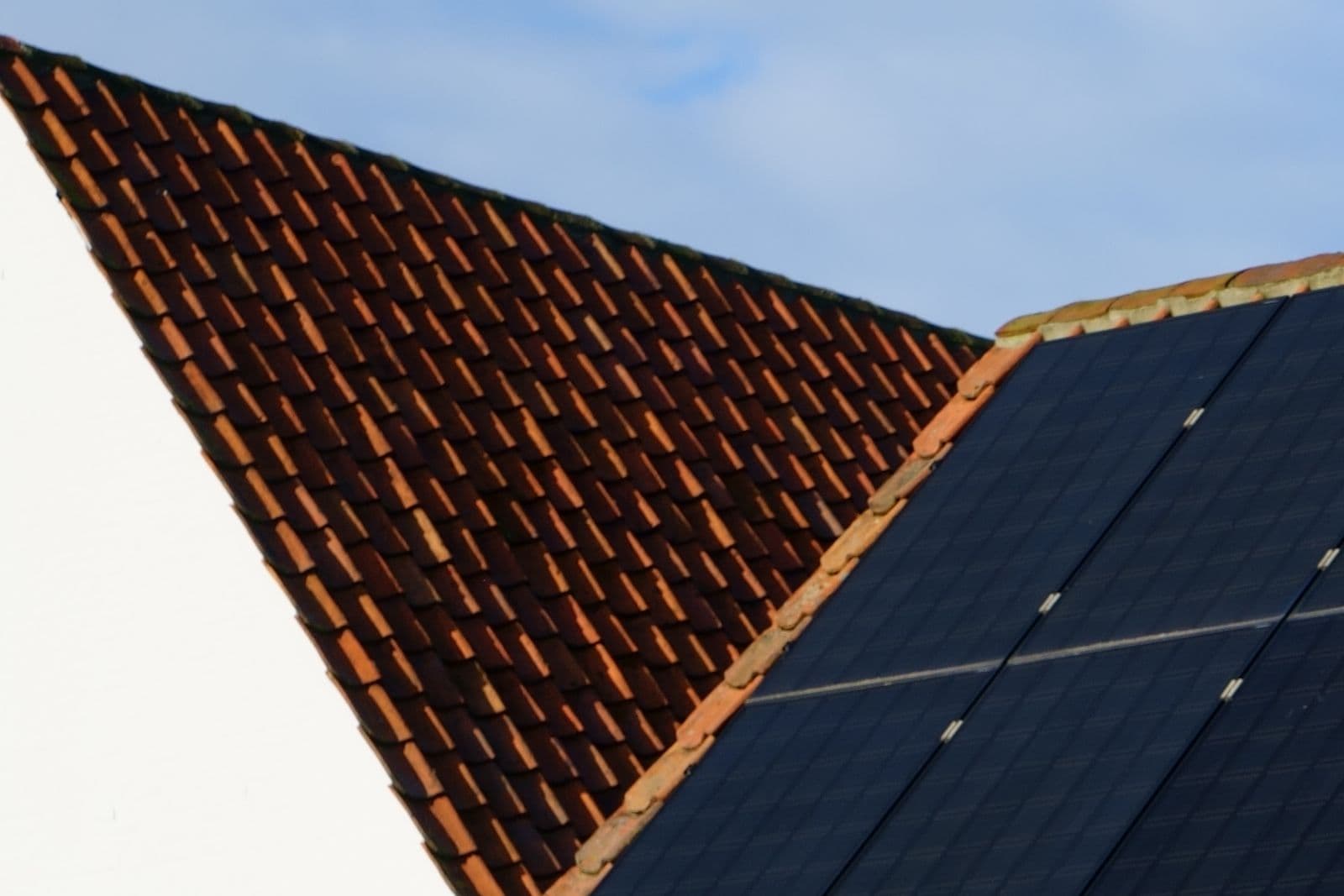
Photo: Pexels
Sometimes, and it depends on the document. Fitting solar means putting holes in a roof, so whether that affects your roof warranty comes down to what your specific roofing manufacturer's warranty says about penetrations and who is allowed to make them. Some are unaffected. Some require the work to be done by an approved contractor. Some exclude anything attached to the roof by a third party.
The only way to know is to read your roof warranty document before the install, not after.
Three separate warranties, three separate companies
The confusion here comes from treating "the warranty" as one thing. On a house with solar, three different documents are in play, and they are held by three different companies.
| Warranty | Held by | Covers | Does not cover |
|---|---|---|---|
| Roofing material warranty | The roofing manufacturer | The tiles, shingles or sheets themselves failing | Anything anyone else attached to them |
| Roofing workmanship warranty | The roofer who installed the roof | The roof being installed correctly | Holes drilled by someone else later |
| Solar workmanship warranty | The solar installer | The solar install, including the penetrations they made | The roof material itself |
| Solar equipment warranty | The panel, inverter or battery maker | The equipment being faulty | The roof, in any form |
Read the last row carefully. Your panel manufacturer's warranty covers the panel. It has nothing to say about your roof, ever, under any circumstances. Nobody at a panel manufacturer is going to pay for water in your ceiling.
That is not a criticism of panel warranties. It is just what they are for, and it is worth knowing before you go looking for help in the wrong place. Read any of them and you will see the same shape. The Jinko warranty page, for example, records a term that starts at delivery or 180 days after manufacture, a claim file of a warranty certificate plus the purchase and installation invoices, and nothing whatsoever about the surface the panel is bolted to.
Where the actual risk sits
Not with the panels. With the holes.
A solar array on a pitched roof is bolted to the structure through the roof covering. Each of those penetrations is a place water can get in if it is not flashed and sealed correctly. Do it well and it lasts as long as the roof. Do it badly and you get a leak, sometimes years later, sometimes far from the hole itself because water travels.
So the risk is not "solar panels damage roofs". It is "penetrations made badly damage roofs, and solar involves penetrations".
Two related risks are worth naming.
Roof age. If a roof has five years left in it, putting a 25 year system on top of it is a decision to pay for panel removal and refitting when the roof gets replaced. That is not a warranty problem. It is a sequencing problem, and it is cheaper to fix by doing the roof first.
Load and access. An array adds weight and it covers the roof. Both make future roof work harder and more expensive. Nobody's warranty covers being annoying to work on.

What roofing warranties typically say about this
We are going to be careful here, because roofing manufacturer terms are not something we have verified. This site publishes solar equipment warranty terms checked against the manufacturer's own document with a date on it, and we do not hold the same for roofing.
What we can tell you is the shape of the question you need to answer. Roofing warranties generally deal with third party work in one of a few ways:
- Silence, in which case the penetrations are simply not covered but the rest of the roof is
- A requirement that any penetration is made by an approved or certified contractor
- A requirement that the manufacturer is notified, or that specific flashing products are used
- An exclusion of any area affected by third party attachments
- A full exclusion if unauthorised work is done at all
Which of those applies to you is in your document. If you have lost it, the roofing manufacturer will usually supply the current terms for the product, and the builder or roofer who did the roof may have the registration on file.
Ask the question in writing, and keep the answer. That answer is a document worth as much as your solar invoice.
The question that actually protects you
If your roof warranty is silent on penetrations, or you cannot find it, there is still a straightforward way to be covered: make sure the solar installer's workmanship warranty explicitly covers water ingress at their penetrations, for a stated number of years.
That is the warranty that should pay if their flashing leaks. Not the roofing manufacturer's, and definitely not the panel maker's.
Ask these before you sign:
- Does your workmanship warranty cover leaks at the mounting points, in writing?
- For how many years?
- Does it cover consequential damage, meaning the ceiling and the insulation, or only the roof itself?
- What mounting and flashing system do you use, and is it appropriate for my roof type?
- Have you checked my roof warranty terms, and are you an approved contractor under them if that is required?
- Who do I call if I find a leak in year four?
The last one matters more than it looks. A ten year workmanship warranty from a company that closes in year three is worth nothing, and solar has a history of companies closing. See what happens when your solar installer goes out of business.
If you already have solar and you have found a leak
Move quickly, because water damage compounds and because the argument about who pays gets harder the longer the evidence sits in your ceiling.
Document it now. Photographs of the stain, the date it appeared, photographs of the roof from outside if you can do it safely, and the weather on the day. A leak that only appears in driving rain from one direction is a diagnosis in itself.
Work out where the water is entering. Directly below a mounting foot points at the solar install. Nowhere near the array points at the roof. Water can travel along a batten before it drops, so do not assume from the stain alone.
Ring the solar installer first if it is anywhere near the array, because their workmanship warranty is the one most likely to apply and they are the ones who made the holes.
Ring a roofer for an independent opinion if the solar installer says it is not theirs. Get it in writing. An independent assessment is what turns a disagreement into a claim.
Check both warranty periods. The solar workmanship warranty and the roofing warranty have different lengths and different start dates.
If it turns out to be an equipment fault rather than a roof problem, the process is completely different and runs through the manufacturer. The claim checklist tool covers that side, and how to file a solar warranty claim walks through it brand by brand.
The honest summary
Solar does not automatically void a roof warranty. It creates a situation where three documents overlap, and where the one thing that will definitely not help you is the panel manufacturer's warranty.
The order of protection is:
- Read your roof warranty before you install, and follow whatever it says about approved contractors and penetrations.
- Get the solar installer's workmanship warranty in writing, covering leaks at the mounting points, for a stated term.
- If the roof is near the end of its life, do the roof first.
- Keep all three documents together, because the day you need one, you will need to know which one.
While you are keeping documents, keep the equipment paperwork too. Serial numbers, install date, invoice. That is the file that makes an equipment claim work a decade from now, and it is covered in what to keep so a solar warranty claim gets paid.
Keep reading
Solar panel warranty explained: the three types and what each one covers
A solar system carries three separate warranties, and they are held by different companies. Here is what each one covers, how long it lasts, and which one you need when something breaks.
Warranty basicsHow long do solar panels last? The answer with a document behind it
Every other page answers this with an average somebody made up. The only enforceable answer is the term a manufacturer signed: 25 to 30 years on the panel brands we have checked, and 10 to 12 on the inverters.
Keep the serial, the photo and the date on every install
Claim Timer stores one record per piece of equipment, with the nameplate photo and the registration confirmation on it, so the claim has its proof already.