
Enphase microinverter warranty: 25 years, activation, and what labour is covered
Enphase IQ8 microinverters carry 25 years, running from activation in Enlighten rather than from install. In the United States Enphase also pays toward labour, which almost no other brand does. Here is how both parts work.
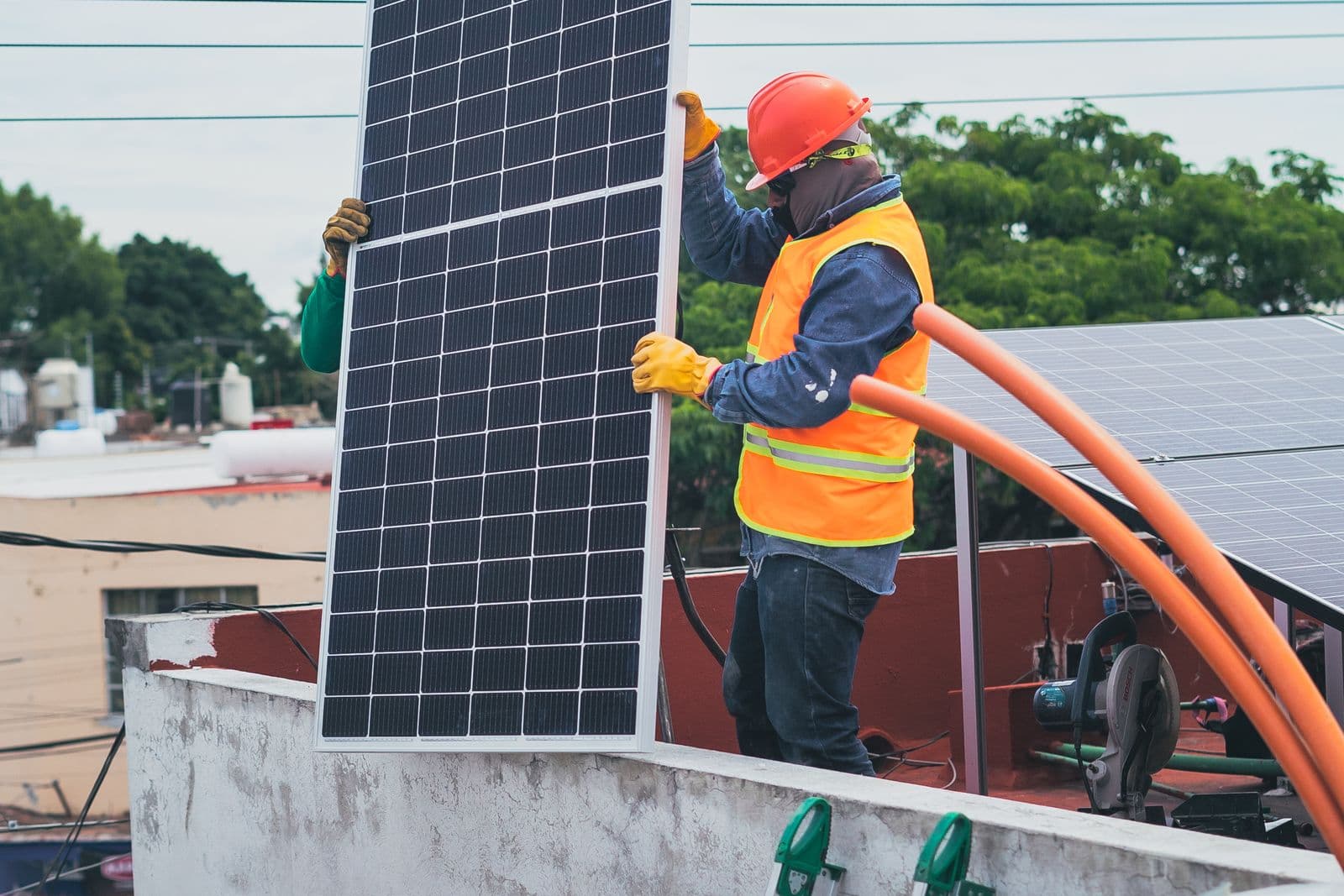
Photo: Pexels
Enphase IQ8 microinverters carry a 25 year warranty. The term runs from the moment the system is activated in Enlighten, Enphase's monitoring platform, not from the day the boxes arrived. In the United States, Enphase also pays toward the labour of a claim: $200 per truck roll plus $25 for each microinverter replaced. Most brands pay nothing.
Those two facts are the whole story, and the second one is unusual enough to be worth understanding properly.
Activation is the condition, not a deadline
There is no registration form with a countdown on it. What there is instead is a condition: the system has to have been activated in Enlighten at commissioning, and the 25 year term applies from that activation.
So the question is not "did I miss a deadline". It is "did activation actually happen, and when".
You can check this yourself. Log into Enlighten. If your system is there, showing production, with your microinverters listed by serial, activation happened. If it is not, something went wrong on the day and it needs fixing while your installer is still reachable.
Two failure modes are worth knowing about. A system commissioned under the wrong address or the wrong customer record still works, but the warranty record points at the wrong house. And a system activated weeks or months after install starts its 25 years late, which sounds like it works in your favour but means the paperwork and the reality disagree, and disagreements are what claims die on.
The Enphase warranty page holds the full record with the date each document was read.
Why microinverters change the shape of a claim
A string inverter system has one inverter. If it fails, the whole system stops, and you know immediately.
An Enphase system has one microinverter per panel, sitting under the panel on the roof. If one fails, the system keeps running. You lose the output of one panel out of however many you have, which on a normal roof is a small enough drop that you will not notice it from your power bill.
This matters for two reasons.
First, faults hide. A dead microinverter can sit there for a year. The only thing that tells you is the per panel view in Enlighten, which is exactly the thing nobody opens once the novelty wears off. Set yourself a reminder to look at it twice a year. It takes thirty seconds.
Second, the repair is a roof job. Getting to a microinverter means lifting the panel above it. That is not a wall mounted swap in the garage, it is scaffolding or a ladder, a licensed electrician, and panel removal and refitting. Which brings us to the money.

What Enphase actually pays toward labour
In the United States, Enphase reimburses $200 per truck roll plus $25 per replaced microinverter.
Read that as what it is. It is a contribution, not a bill payer. A truck roll on a residential roof costs more than $200 by the time you count the drive, the electrician's hours, the ladder or scaffold, and the paperwork. But $200 is $200 more than almost every other manufacturer in our catalogue pays, which is nothing at all.
There is a paid extension called the Labor Protection Program that stretches labour cover to five or ten years from activation. Whether it is worth buying depends on numbers that are specific to you: how far you are from anyone who services Enphase, how many microinverters you have, and what the local rate is. It is a calculation, not a rule of thumb. The truck roll cost tool exists to do exactly that arithmetic, with the reimbursement figures already in it.
One caveat, and it is an important one. The labour reimbursement and the Labor Protection Program are things we checked on the United States side, on 16 August 2026, against Enphase's US warranty and Labor Protection Program pages. We are not going to tell you the same figures apply in another market, because we have not read the document that would prove it. The Australian terms were checked separately, on 30 July 2026, and what we recorded there is the 25 year IQ8 term and the activation condition.
Parts, labour, and the gap between them
Here is the general rule for solar, and Enphase is the exception that proves it.
| What breaks | Who pays for the part | Who pays for the work |
|---|---|---|
| Microinverter, in term, US | Enphase | Enphase pays $200 per visit plus $25 per unit, you or your installer cover the rest |
| Most other inverters, in term | The manufacturer | You, unless your installer sold you labour cover |
| The install itself, wiring, mounting | The installer | The installer |
The middle row is where the angry phone calls come from. Free part, several hundred dollars of electrician. See how the three solar warranties split up if that distinction is new to you.
How to file an Enphase claim
Claims run through an installer. Enphase wants a trade diagnosis and a system that has been looked at, not a homeowner reporting a number in an app.
Have this ready before you ring anyone:
- The serial numbers of the affected microinverters, which Enlighten lists per panel
- The model
- The installation date and something that proves it
- Your name and the installation address
- Screenshots from Enlighten showing the panel level production, with dates
The screenshots are the strongest thing you have. A per panel chart showing one unit flatlining while its neighbours carry on is a diagnosis in a picture. It is worth capturing the view before anything gets reset or reconfigured.
The Enphase claim page has the full evidence list, and the claim checklist tool prints it.
What to do this week
If you have an Enphase system, three things, none of which take long.
- Log into Enlighten and confirm your system is there with the right address and the right serials. That is your activation check.
- Look at the per panel view. Any panel producing far below its neighbours on the same roof plane, in the same weather, is worth asking about.
- Find out from your installer whether you have the Labor Protection Program, and if you do, when it runs out. It is measured from activation.
If your installer has closed
The Enphase warranty is held by Enphase. It does not die with the company that installed your system, and neither does the activation record in Enlighten.
What dies is the workmanship warranty on the install itself, and the person who would ordinarily have filed the claim for you at no charge. Another installer can take it on, but they will bill you for attending, because nobody else is going to. In the United States the labour reimbursement softens that, which is worth something. It does not remove it.
If you are in that position, the useful thing to do first is make sure you still have access to the Enlighten account. Accounts set up by a company that has closed can be awkward to recover, and the per panel history in there is your best evidence for any future claim. Get it moved into your own name while there is still somebody to ask.
There is more on the general situation in what happens when your solar installer goes out of business.
What we know and what we do not
We hold Enphase's 25 year IQ8 term, the activation condition, and the US labour figures, each with the date the document was read.
We do not publish an Enphase battery warranty term here, because we have not verified one. Enphase makes batteries, they will have their own terms, and those terms are not in our checked record. If you have an Enphase battery, ask for the warranty document for that specific product rather than assuming the microinverter term carries across.
Compare Enphase against the other inverter brands on the inverter warranty page, or read the SolarEdge terms if you are choosing between the two.
Checked against
Warranty terms change and differ by country. Treat this as a starting point and check the manufacturer's current document before you rely on it.
Keep reading
Solar panel warranty explained: the three types and what each one covers
A solar system carries three separate warranties, and they are held by different companies. Here is what each one covers, how long it lasts, and which one you need when something breaks.
Warranty basicsHow long do solar panels last? The answer with a document behind it
Every other page answers this with an average somebody made up. The only enforceable answer is the term a manufacturer signed: 25 to 30 years on the panel brands we have checked, and 10 to 12 on the inverters.
Keep the serial, the photo and the date on every install
Claim Timer stores one record per piece of equipment, with the nameplate photo and the registration confirmation on it, so the claim has its proof already.